
Key reforms in the Punjab Labour Code 2026
Introduction
The Punjab Labour Code 2026 is a landmark reform that brings together more than two dozen fragmented labour laws into a single modern code and aligns provincial law more closely with International Labour Standards and constitutional guarantees.
The new Punjab Labour Code has the potential to transform the lives of millions of working people, from factory workers and nurses to domestic, agricultural and platform workers. For the first time, one coherent law recognises that all workers deserve dignity, protection and a voice at work, regardless of where or how they are employed.
The Punjab Labour Code is directly applicable to the province’s 48 million-strong labour force. It also indirectly affects the remaining 50 million working-age people who are not in the active labour force for various reasons (Punjab’s total working-age population is 98 million, as per the LFS 2024-25).
Comparison basis: the “Earlier legislation:” references below principally compare the Code with the Punjab labour laws in force immediately before the Code, especially the 26 laws repealed by section 435, and with closely related legislation where relevant.
Part IOperation and Definitions
AOne Code for All Workers and All Workplaces
PLC 2026: The Code replaces a patchwork of colonial-era and post-independence 26 laws with a single, province-wide framework. It applies across sectors and workplaces, rather than the old sector-specific laws and numerical thresholds that left many workers uncovered. (Section 2)
Earlier legislation: section 435 of the Code repeals 26 separate labour laws. Those laws operated with different scopes and thresholds; for example, the Standing Orders Ordinance 1968 generally applied at 20 or more workmen, while the Employment (Record of Services) Act 1951 applied only to notified classes and areas.
PLC 2026: The Code applies to all workers, employers, principals and occupiers at all workplaces in all sectors of Punjab, with limited exceptions only for civil servants regulated under the Punjab Civil Servants Act 1974, defence services and police, including law enforcement and civil armed forces. (Section 2)
Earlier legislation: there was no single universal coverage clause. The Punjab Industrial Relations Act 2010, Standing Orders Ordinance 1968, Shops and Establishments Ordinance 1969 and other laws each had their own coverage rules, exclusions and thresholds.
PLC 2026: It makes the Code non-derogable: any term in a contract, internal work regulation, collective agreement or other instrument that excludes or limits a provision of the Code, or that prevents a person from approaching a dispute resolution body under the Code, is void. Only terms that are more favourable to the worker survive. (Section 3)
Earlier legislation: non-contracting-out rules existed in individual laws, including section 23 of the Payment of Wages Act 1936 and section 21 of the Punjab Shops and Establishments Ordinance 1969. Section 3 makes the principle Code-wide and adds express protection of access to dispute-resolution bodies.
BInclusive definition of Worker
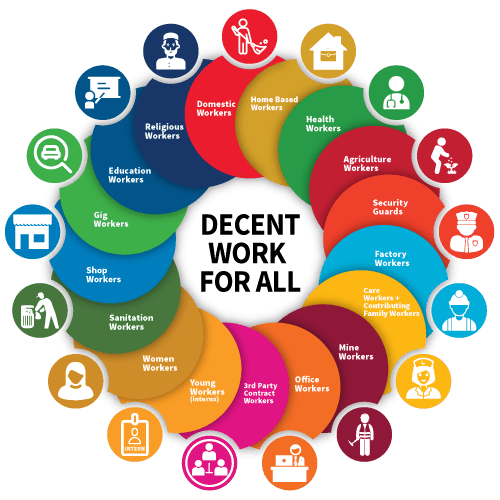
PLC 2026: The Code adopts a comprehensive concept of “worker” that covers employees, self-employed workers, online/platform or gig workers, domestic workers, home-based workers, agricultural workers, construction workers, interns, and others, whether in the formal or informal economy. (Section 4 read with Section 5)
Earlier legislation: worker or employee definitions were fragmented. The Punjab Industrial Relations Act 2010 excluded persons mainly in managerial or administrative capacity; the Standing Orders Ordinance 1968 used a narrower concept of workman; and domestic and home-based workers were governed by separate laws. The Workmen’s Compensation Act, 1923 and the Standing Orders Ordinance, 1968 used the term workman; Factories Act, 1934 and Companies Profits (Workers Participation) Act, 1968 used the term worker; Punjab Industrial Relations Act, 2010 used the terms worker and workman interchangeably; the Shops and Establishments Ordinance, 1969 and referred the Punjab Occupational Safety and Health Act, 2019 referred to the term employee while the Payment of Wages Act, 1936 referred to the “persons employed”. They all meant the same thing. A worker, workman, employee, or person employed meant someone with an employment relationship with an employer.
PLC 2026 replaces the fragmented terminology of earlier Punjab labour legislation under which protected persons were variously defined as ‘workers’, ‘workmen’, ‘employees’, or sector-specific categories with a single overarching definition of ‘worker’, while retaining ‘employee’ as a distinct subset.
Earlier legislation used different terms, and each term covered different groups of workers.
PLC 2026: The Punjab Labour Code extends its general framework to managerial and administrative employees. (Sections 4 read with Section 5)
Earlier legislation: The Punjab Industrial Relations Act 2010 expressly excluded persons employed mainly in a managerial or administrative capacity from the definition of “worker/workman”, although some other laws, notably the Punjab Occupational Safety and Health Act 2019, used broader employee definitions.
PLC 2026: The legal relationship of “master and servant” and the “rule of master and servant” are abolished. (Section 4, read with Section 5)
Earlier legislation: none of the 26 repealed labour laws expressly abolished the common-law master-and-servant doctrine, which continued to appear in judicial decisions.
PLC 2026 defines “employer”, “principal” and “occupier” separately and clarifies the legal responsibility of each, ensuring that liability is properly allocated where multiple persons exercise control at a workplace. (Sections 7, 9 & 10)
Earlier legislation: individual laws defined employer, occupier, contractor or similar duty-holders for their own purposes, notably the Factories Act 1934 and Punjab Occupational Safety and Health Act 2019, but did not provide one Code-wide allocation rule for overlapping responsibility.
PLC 2026 introduces the concept of “engagement” to capture all forms of work-for-another beyond the traditional employment contract, irrespective of the contractual basis. (Section 8)
Earlier legislation: no repealed law used a single, Code-wide concept of “engagement” to determine coverage independently of the contractual form.
PLC 2026 separately defines “contractor” and “self-employed”, providing a clearer basis for distinguishing genuine self-employment from disguised employment. (Section 11)
Earlier legislation: the Punjab Occupational Safety and Health Act 2019 already defined “contractor” and “self-employed person” for OSH purposes; the Code applies the distinction across the broader labour-law framework.
PLC 2026 provides that where the Code, or any rule, regulation, award, collective agreement or order made under it imposes obligations on more than one person, each of them is jointly and severally responsible for compliance and jointly and severally liable in the event of contravention. (Section 10)
Earlier legislation: joint liability existed only in defined situations, such as the liability of a principal for compensation under section 12 of the Workmen’s Compensation Act 1923. Section 10 generalises joint and several responsibility across every obligation created by the Code, which matters most in contracting, sub-contracting and multi-employer workplaces.
CComprehensive definition of workplace
PLC 2026 consolidates and broadens the definitions of “workplace” and “establishment”, expressly accommodating digital/platform work and other non-traditional places of work while carrying forward coverage of construction work and charitable or non-profit organisations found in some earlier laws. (Section 12)
Earlier Punjab labour laws treated charitable and non-profit organisations inconsistently: some laws expressly covered them, while others excluded charitable activities.
PLC 2026 provides a more uniform framework by applying labour protections across workplaces irrespective of their profit-making status.
PLC 2026 expressly brings work-related trips, travel, training, events and social activities, work performed through information and communication technologies, and employer-provided accommodation within the concept of a workplace. (Section 12)
Earlier legislation: The earlier OSH definition focused principally on premises where work was carried out. (Punjab Occupational Safety and Health Act 2019, section 2(v))
Part IIFundamental Principles and Rights at Work
Part II of the Code is intended to give effect, at the provincial level, to the fundamental ILO instruments on freedom of association and collective bargaining, the elimination of forced or compulsory labour, the abolition of child labour, the elimination of discrimination, and a safe and healthy working environment. It applies to all persons and workplaces, including employers, principals, occupiers, contractors, sub-contractors and workers.
DBonded, Forced or Compulsory Labour
PLC 2026 now includes a definition and detailed provisions prohibiting bonded labour and forced or compulsory labour. Forced labour now includes “forced overtime beyond normal overtime limits of a maximum of 8 hours per week”. (Section 15) Earlier legislation: the Bonded Labour System (Abolition) Act 1992 defined and abolished the bonded labour system, but did not contain a general ILO-style definition of forced or compulsory labour covering matters such as forced overtime.
PLC 2026 considers the engagement of a child in the worst forms of child labour as forced or compulsory labour. (Section 15(f)(iii)) Earlier legislation: child labour laws prohibited child work and hazardous work but did not expressly classify engagement in the worst forms of child labour as forced or compulsory labour within one general forced-labour provision.
PLC 2026 clarifies what is not considered forced or compulsory labour, such as compulsory military service, normal civic obligations, work exacted under a court conviction, work in genuine emergencies, and minor communal services performed in the direct interest of the community. (Section 15(f)(iv))
Earlier legislation: the Bonded Labour System (Abolition) Act 1992, amended in 2018, did set out a similar consolidated list of exclusions from forced or compulsory labour. PLC replicates the provisions of Convention 29 on Forced Labour.
PLC 2026 regulates the payment of advance (Peshgi), allowing an interest-free loan up to three times the applicable minimum wage for unskilled workers. It requires maintaining proper records of advances and recoveries. Payments for advances and recoveries thereof are to be made through banking channels. These records will be accessible to labour inspectors. (Section 18)
Earlier legislation: Section 4 of the Punjab Prohibition of Child Labour at Brick Kilns Act 2016 capped Peshgi at PKR 50,000 and required a register; the Bonded Labour System (Abolition) Act 1992 defined an advance but did not impose the Code’s province-wide three times the minimum wage, interest-free, banking-channel rules.
PLC 2026 caps the recovery of any advance at one-fifth (20%) of the worker’s remuneration and prohibits any new advance until the previous one has been fully repaid. (Section 18)
Earlier legislation: the repealed laws did not impose a general 20% remuneration ceiling on recovery of advances, or prohibit a new advance until repayment of the previous one.
EElimination of Child Labour
PLC 2026 defines a child as a person under 16 years of age. A young person (previously, the term “adolescent” was used) is defined as someone between 16 and 18 years of age. (Section 22)
Earlier legislation: the Punjab Restriction on Employment of Children Act 2016 defined a child as under 15 and an adolescent as 15–17, while the Punjab Prohibition of Child Labour at Brick Kilns Act 2016 defined a child as under 14.
PLC 2026 raises the minimum age for admission to employment to 16 years. (Section 23).
Earlier legislation: the general 2016 child-labour law prohibited employment of children below 15. The Code raises the age for regular work to 16 while creating a separate light-work route from age 14.
Under the PLC 2026, the minimum age for light work is set at 14 years. It allows a maximum of 4 hours of light work per day for children aged 14-16 years.
Earlier legislation: the 2016 general child-labour law did not create a general light-work regime for children aged 14–16; its adolescent work regime began at age 15 and was subject to working-time (maximum of 6 hours per day) and hazardous-work restrictions.
PLC 2026 includes a schedule for light work. Schedule 1 sets out the list of light work permitted for children aged 14–16, in line with ILO Convention 138. (Section 24, Schedule 1)
Earlier legislation: the Punjab Restriction on Employment of Children Act 2016 had a hazardous-work schedule, but no corresponding statutory schedule listing permitted light work.
PLC 2026 prohibits all forms of the worst forms of child labour without exception, in line with ILO Convention 182. (Section 25)
Earlier legislation: the 2016 law prohibited child employment and adolescent hazardous work but did not consolidate all Convention No. 182 worst forms into one express prohibition.
PLC 2026 also includes an updated hazardous-work schedule that now includes domestic and night work. (Section 26, Schedule 2)
Earlier legislation: the Punjab Restriction on Employment of Children Act 2016 already contained a hazardous-work schedule, including construction-related activities; Schedule 2 of the Code updates and broadens that list to include domestic work and night work.
PLC 2026 sets a single working-time regime for young persons: a maximum of seven hours in a day including a mandatory one-hour rest interval, no more than three hours of work before that interval, at least twelve consecutive hours of daily uninterrupted rest, and a prohibition on night work between 7:00 pm and 8:00 am, on overtime, and on work on weekly rest days and public holidays. A young person may not be engaged on any day on which he has already worked at least six hours in another establishment. (Section 27)
Earlier legislation: working-time restrictions for children and adolescents were split between the Punjab Restriction on Employment of Children Act 2016 and section 54 of the Factories Act 1934, which applied only to factories. The Code replaces those with one province-wide rule and adds an express double-employment bar.
FEquality of Opportunity and Treatment
PLC 2026 includes a clear definition of discrimination and imposes anti-discrimination obligations on every employer, principal and occupier, in all aspects of recruitment, terms of engagement, training, promotion and termination. (Sections 13 & 33)
Earlier legislation: anti-discrimination protection was scattered. Section 21 of the Punjab Minimum Wages Act 2019 prohibited discrimination in enforcement of that Act on specified grounds; the Punjab Domestic Workers Act 2019 contained sector-specific equality protection; and the Punjab Industrial Relations Act 2010 prohibited specified trade-union discrimination.
PLC 2026 includes a clear definition of discrimination and its manifestations (direct and indirect), as well as what is NOT discrimination. (Section 34)
Earlier legislation: the repealed labour laws did not provide a general statutory framework distinguishing direct and indirect discrimination and specifying what does not constitute discrimination.
PLC 2026: The 15 prohibited grounds for discrimination are: race; colour; sex and gender; pregnancy; age; family responsibilities; religion (including sect and creed); political opinion; national extraction; ethnicity; social origin (including caste); participation or non-participation in trade union activities; language (including dialect); disability; and physical appearance. (Section 35)
Earlier legislation: prior laws used narrower, context-specific lists of grounds. The Code creates one general list applicable across employment and occupation.
PLC 2026 expressly recognises “family responsibilities”, covering both men and women workers with caring responsibilities for dependent children or other family members, as a prohibited ground of discrimination. (Section 35(2))
Earlier legislation: family responsibilities were not expressly recognised as a general prohibited ground of discrimination across Punjab labour legislation.
PLC 2026 gives full expression to the principle of equal remuneration for men and women for work of equal value. All provisions on minimum wages and remuneration refer to objective job evaluation methods. (Section 36)
Earlier legislation: equal-pay protection existed only in limited contexts; the Code establishes a general equal-remuneration-for-work-of-equal-value obligation across its remuneration and minimum-wage framework.
PLC 2026 defines remuneration to include all utility and contingent allowances, which means that these allowances cannot be different for male and female workers in comparable jobs. (Section 36)
Earlier legislation: there was no Code-wide equal-remuneration rule expressly applying to utility and contingent allowances as components of remuneration.
PLC 2026 requires the establishment of the Equal Employment Opportunity Office in the Labour Department in the Labour Department to raise awareness, conduct studies on objective job evaluation, address the gender pay gap, investigate complaints, and provide legal aid to victims of discrimination. (Section 310) Earlier legislation: There was no such provision under the Earlier legislation.
PLC 2026 requires that, in recommending minimum wages, the Minimum Wages Board shall adhere to the principle of equal remuneration for men and women employees for work of equal value. (Section 317)
GOccupational Safety and Health
PLC 2026 has consistent provisions applicable across sectors. Most of the details are left to rules, so they can be easily amended to address new issues.
Earlier legislation: OSH duties were divided principally between the Factories Act 1934 and the Punjab Occupational Safety and Health Act 2019, alongside sector-specific provisions. The Code consolidates them into a common framework.
PLC 2026 expressly recognises that a person may simultaneously be an employer, principal, occupier, contractor, sub-contractor, designer, manufacturer, supplier, erector, installer, owner, hirer or lessee, and assigns concurrent and overlapping duties accordingly so that no duty-holder can deflect responsibility. (Section 41)
Earlier legislation: the Punjab Occupational Safety and Health Act 2019 imposed duties on several actors, but did not contain the Code’s express concurrent-and-overlapping-duties rule preventing one duty-holder from relying on another’s responsibility.
PLC 2026 clearly defines the duties of all parties — employer, principal, occupier, worker, self-worker, manufacturer, supplier and persons in control of premises, with regard to occupational safety and health. (Sections 43–49)
Earlier legislation: sections 3–7 of the Punjab Occupational Safety and Health Act 2019 already imposed duties on employers, employees, self-employed persons, persons controlling premises and manufacturers. The Code reorganises and expands those duties across its employer/principal/occupier framework.
PLC 2026, for the first time in Punjab labour law, provides a comprehensive definition of “violence and harassment”, covering physical, psychological, sexual or economic harm, including gender-based violence and sexual harassment, so that the same standard applies across all workplaces and all categories of workers. (Section 13 & 50)
Earlier legislation: Pakistan’s workplace-harassment legislation addressed sexual harassment, while the repealed Punjab labour laws did not contain a Code-wide definition covering physical, psychological, sexual and economic harm for all workers and workplaces.
PLC 2026 requires the establishment of a Grievance Redressal Committee at every workplace employing more than 10 employees to enquire into complaints of discrimination and harassment, with at least one woman member where women are employed. (Section 51)
Earlier legislation: workplace inquiry mechanisms existed for sexual harassment, and the Punjab Domestic Workers Act 2019 as well as the Punjab Home-based Workers Act, 2023 had a sectoral dispute mechanism, but no general committee with the Code’s combined discrimination-and-harassment remit at the stated threshold.
PLC 2026 reconfigures and strengthens the system of Safety and Health Representatives at workplaces with 30 or more workers, appointed by the collective bargaining agent or elected by workers, with statutory functions and protections. (Sections 53 & 55)
Earlier legislation: Section 10 of the Punjab Occupational Safety and Health Act 2019 already required employers with more than five employees to provide for the election of safety and health representatives.
PLC 2026 requires the establishment of bipartite Safety and Health Committees at workplaces with 50 or more workers, with at least half of the members being workers not nominated by the employer, and provides for sub-committees at department, section, regional or platform level. (Section 54)
Earlier legislation: the Punjab Occupational Safety and Health Act 2019 provided for safety and health representatives but did not create the Code’s mandatory bipartite safety-and-health committee structure at the 50-worker threshold.
PLC 2026 protects workers who take on safety and health responsibilities: no employer, principal or occupier may dismiss or take other prejudicial measures, including salary deduction, because a worker is or proposes to be a safety and health representative or committee member, exercises a power or function under Chapter 2.5, raises a safety or health concern with the employer, an Inspector, a representative, a committee member, a trade union or another worker, exercises the right to withdraw from imminent danger, or is involved in proceedings under Part VI. The burden of proving that the action was not taken for such a reason rests on the employer, principal or occupier. (Section 55)
Earlier legislation: no repealed law combined express anti-retaliation protection for safety representatives with a reversed burden of proof. This is one of the most consequential evidential shifts in Chapter 2.5.
PLC 2026 retains and carries forward the Hygiene Card requirement, with medical examination and vaccination or inoculation where prescribed.
Earlier legislation: Earlier, section 11 of the Punjab Occupational Safety and Health Act 2019 already required a Hygiene Card for each employee, with periodic medical examination at the employer’s expense. (Section 57)
PLC 2026 gives inspectors comprehensive remedial powers through the issuance of improvement notices and prohibition notices. (Sections 64-65)
Earlier legislation: inspectors had OSH enforcement powers under the Factories Act 1934 and Punjab Occupational Safety and Health Act 2019, but the Code adds a structured improvement-notice and prohibition-notice regime.
PLC 2026 grants workers the right to leave the workplace in case of imminent danger, including the power for safety and health representatives or committees to direct workers to cease work in case of imminent and serious danger; the worker cannot be required to return until the danger is addressed. (Sections 66-67)
Earlier legislation: the repealed laws did not state a general worker right, in these terms, to remove oneself from imminent and serious danger without being required to return until the danger is addressed.
HFreedom of Association and Collective Bargaining
PLC 2026 grants the right to freedom of association and the right to collective bargaining to all workers in all sectors (except civil servants, the armed forces, and the police). (Section 2)
Earlier legislation: the Punjab Industrial Relations Act 2010 protected freedom of association for “workmen” within its own coverage and exclusions, including the exclusion of persons mainly in managerial or administrative capacity. The Code links the right to the broader “worker” definition.
PLC 2026: Workers engaged in different jobs at different workplaces can join trade unions at each workplace. (Section 74)
Earlier legislation: the Punjab Industrial Relations Act 2010 restricted a worker from membership of more than one trade union at one time in the relevant employment context; the Code clarifies membership where a worker has genuinely separate jobs and workplaces.
PLC 2026: The minimum membership requirement for trade union registration is 5% of all workers, or 20 workers, whichever is lower, for all trade unions. (Section 84)
Earlier legislation: where two or more unions existed, section 6(2)(b) of the Punjab Industrial Relations Act 2010 required at least one-fifth of the total workmen as members for registration. The Code substantially lowers the threshold.
PLC 2026 allows third-party contract workers to join the trade union of the establishment or the group of establishments where they have been engaged. (Sections 84 & 211)
Earlier legislation: the Punjab Industrial Relations Act 2010 could include contractor-supplied workers within “worker/workman”, but the Code expressly secures their right to join the trade union at the host establishment or group of establishments.
PLC 2026 protects not only the office bearers but also all the members of the trade union during the pendency of the application for registration of the trade union. (Section 91)
Earlier legislation: Section 10 of the Punjab Industrial Relations Act 2010 protected office-bearers during the pendency of a registration application; the Code extends protection to all members.
PLC 2026 expressly structures collective bargaining at the enterprise, occupational or sectoral, and provincial levels.
Earlier legislation: The Punjab Industrial Relations Act 2010 already recognised collective bargaining agents for an establishment, a group of establishments and an industry, but it did not create the Code’s express multi-level framework, including provincial-level bargaining. (Section 99)
PLC 2026 expressly recognises collective bargaining by federations and confederations of trade unions extending beyond a single employer. (Section 105)
Earlier legislation: the Punjab Industrial Relations Act 2010 already provided for registration of federations and confederations and allowed federations to raise industrial disputes. The Code makes their collective-bargaining role beyond a single employer explicit.
PLC 2026 includes the concept of bargaining in good faith, where both parties make every reasonable effort to conclude a collective agreement, including the assistance of mediators or conciliators. (Section 107)
Earlier legislation: the Punjab Industrial Relations Act 2010 regulated negotiations, conciliation and bargaining processes but did not impose this express statutory duty to bargain in good faith.
PLC 2026 expressly enables workers engaged by a principal to bargain collectively with that principal, either under Part IV or in the prescribed manner where Part IV is not applicable. (Section 115)
Earlier legislation: The earlier PIRA framework was centred on collective bargaining between workmen and their employer. (Punjab Industrial Relations Act 2010, sections 24–25)
PLC 2026 carries forward and tightens the anti-replacement rule by prohibiting employers from replacing striking workers, including temporarily.
Earlier legislation: Under section 17(h) of the Punjab Industrial Relations Act 2010, recruiting new workmen during a strike was already prohibited, subject to a limited conciliator-authorised exception to prevent serious damage to machinery or installations. (Section 118)
PLC 2026 recognises go-slow as a legal form of industrial action, requiring a minimum notice of 5 days before resorting to go-slow. (Section 121)
Earlier legislation: section 18(1)(e) of the Punjab Industrial Relations Act 2010 treated go-slow as an unfair labour practice. The Code reverses that position by recognising a notified go-slow as lawful industrial action.
PLC 2026 prohibits strikes or lockouts in essential services. (Section 124 & Schedule 4)
Earlier legislation: strikes in public-utility and essential contexts were regulated through the Punjab Industrial Relations Act 2010 and essential-services legislation; the Code replaces that dispersed approach with an express essential-services prohibition tied to Schedule 4.
PLC 2026 allows strikes or lockouts in public utilities, though requiring maintenance of 40% of service during the currency of the strike or lockout. (Section 125 & Schedule 3)
Earlier legislation: the Punjab Industrial Relations Act 2010 imposed special controls on strikes and lockouts in public utility services. The Code permits industrial action subject to the specific 40% continuity requirement.
Part IIIEmployment
IEmployment
PLC 2026 includes the control and integration tests to determine whether an employment relationship exists or not, irrespective of the label used in the contract, in line with ILO Recommendation 198. (Section 132)
Earlier legislation: the repealed labour laws generally relied on their own worker/workman definitions and case-law characterisation; they did not codify a general control-and-integration test overriding the contractual label.
PLC 2026 expressly prohibits the deliberate misclassification of an employee as a contractor or self-employed person and provides for legal consequences where misclassification is found. (Section 133)
Earlier legislation: there was no express, general statutory prohibition on deliberate employee misclassification as a contractor or self-employed person with a Code-wide remedial consequence.
PLC 2026 provides two basic types of employment: permanent employment and fixed-term employment. (Section 134)
Earlier legislation: Standing Order 1 under the Standing Orders Ordinance 1968 classified workmen as permanent, probationer, badli, temporary, apprentice and contract worker. The Code simplifies employment status into permanent and fixed-term employment, with separate rules for probation and other arrangements.
PLC 2026, for the first time, recognises and regulates part-time work. Part-time employee means an employee whose normal hours of work, calculated on a daily or weekly basis, are less than the normal hours of work of a comparable full-time employee. (Section 136)
Earlier legislation: the principal repealed employment laws did not define and regulate part-time employment as a distinct employment status.
PLC 2026 recognises that part-time employees receive the same protections as accorded to full-time employees, on a pro-rated basis where appropriate. (Section 136)
Earlier legislation: there was no general statutory rule guaranteeing part-time employees the same protections as comparable full-time employees on a pro-rated basis.
PLC 2026 recognises two types of fixed-term employment agreements: general and special. The maximum length of general fixed-term agreements is still 9 months. For special projects, the maximum duration is 5 years. To engage an employee on a fixed-term basis, objective reasons must be justified. (Section 138)
Earlier legislation: Standing Order 1 treated temporary work as work of an essentially temporary nature likely to be finished within nine months. The Code retains a nine-month general fixed term but adds objective-reason requirements and a special-project route of up to five years.
PLC 2026 prohibits the engagement of fixed-term contract workers for tasks of a permanent nature, elaborating the provisions further. (Section 138(4))
Earlier legislation: the Standing Orders regime distinguished permanent work from temporary work expected to be completed within nine months. Section 138(4) makes the prohibition on using fixed-term arrangements for permanent-nature work explicit.
PLC 2026 allows a special project fixed-term employment agreement for those employees whose remuneration is at least 5 times the applicable minimum wage. (Section 138(8 & 9))
Earlier legislation: there was no comparable five-year special-project fixed-term category limited to higher-paid employees.
PLC 2026 limits the renewal of general fixed-term agreements to two successive terms; further renewal converts the relationship into permanent employment. (Section 139)
Earlier legislation: the Standing Orders regime did not contain a two-successive-renewal rule automatically converting further renewals into permanent employment.
PLC 2026 expressly prohibits less favourable treatment of fixed-term employees compared with permanent employees performing comparable work. (Section 140)
Earlier legislation: there was no express general equal-treatment rule comparing fixed-term and permanent employees performing comparable work.
PLC 2026 universalises the requirement for written employment agreements: the agreement must be issued in duplicate before commencement of employment, with one copy given to the employee. (Section 141)
Earlier legislation: Earlier laws already required written terms in particular contexts, including Standing Order 2A under the Industrial and Commercial Employment (Standing Orders) Ordinance 1968, section 3A of the Road Transport Workers Ordinance 1961, and section 5 of the Punjab Domestic Workers Act 2019.
PLC 2026, for the first time, provides essential contents of an employment agreement, covering parties, job description, place of work, remuneration, working time, leave, period, notice, dispute resolution and reference to the Code. (Section 142)
Earlier legislation: written terms were required in some sectors, but Standing Order 2A only required an order showing terms and conditions generally. The Code prescribes a much more detailed minimum-content list.
PLC 2026 requires every employer to provide each employee with an Employment Card containing prescribed particulars. (Section 143)
Earlier legislation: the Employment (Record of Services) Act 1951 required service books for notified classes and Standing Orders used worker tickets; the Code replaces fragmented documentary requirements with a general Employment Card.
PLC 2026 regulates company policies/HR handbooks. Now, an employer may adopt and publish internal work regulations to regulate remuneration, work organisation, occupational safety and health, and other issues important to employees. These internal work regulations must be agreed upon at the workplace with the CBA or Works Council and approved by the Chief Inspector. (Section 145)
Earlier legislation: the Standing Orders Ordinance 1968 imposed statutory standing orders and permitted modification through its own mechanism. The Code creates a broader workplace system of internal work regulations subject to worker representation and Chief Inspector approval.
PLC 2026 codifies the modes of termination of an employment agreement and requires every termination on grounds related to capacity, conduct or operational requirements to be supported by a valid reason and a written order stating the reason. (Section 146)
Earlier legislation: Standing Order 12(3) already required a written termination order explicitly stating the reason. The Code generalises that safeguard and adds a substantive valid-reason requirement based on capacity, conduct or operational requirements.
PLC 2026 includes prohibited grounds for termination of employment, including trade union membership, participation in union activities, filing of a complaint, statutory leave (including iddat, maternity, paternity and sick leave), exercise of OSH rights and participation in lawful strikes, and bars disciplinary action during such leave or pregnancy-related complications. (Section 147)
Earlier legislation: protection against dismissal existed in separate contexts, including trade-union activity under the Punjab Industrial Relations Act 2010 and maternity under the Punjab Maternity Benefit Ordinance 1958. The Code consolidates and expands the protected grounds.
PLC 2026 provides for constructive termination of employment where an employee can terminate employment with or without notice if the employer’s conduct has made it unreasonable to expect the employee to continue the employment relationship. (Section 148)
Earlier legislation: the principal repealed employment laws did not expressly codify constructive termination in these terms.
PLC 2026 stipulates the conditions for redundancy: termination of 10% employees must be discussed with the collective bargaining agent or the Works Council; termination of up to 25% employees must be approved by the Inspector authorised in this behalf; For more than 25% employees, the approval must be sought from the Labour Court. (Section 149)
Earlier legislation: Standing Order 11A required Labour Court permission for large-scale termination or closure in specified circumstances. The Code replaces that with graduated consultation/approval thresholds at 10%, 25% and above 25%.
PLC 2026 retains and generalises the “last come, first go” principle for redundancy within a category and the one-year preference for re-employment. (Section 149(9)–(10))
Earlier legislation: These principles already appeared in Standing Orders 13 and 14 under the Industrial and Commercial Employment (Standing Orders) Ordinance 1968, but the Code integrates them into its general redundancy framework.
PLC 2026 provides a 30-day written notice (or 30 days’ pay in lieu) for termination by either party in regular establishments and a 14-day notice in micro-enterprises. (Section 150)
Earlier legislation: Standing Order 12(1) and section 19 of the Punjab Shops and Establishments Ordinance 1969 generally required one month’s notice for permanent workers; Standing Order 12(2) provided no notice for temporary, probationary or badli workmen. The notice was available only for permanent workmen.
PLC 2026 provides for job search leave and grants the employee a paid day off per week during the notice period to seek other employment. (Section 150)
Earlier legislation: the repealed laws did not provide a general job search leave mechanism.
PLC 2026 gives an employee a protected right to cease work where remuneration remains unpaid for more than 14 days after the employee has applied to the Payment of Wages Authority or notified an Inspector. The employee cannot be terminated or prejudiced for doing so, and continuity of service and statutory entitlements continue to accrue. (Section 153)
Earlier legislation: The Payment of Wages Act 1936 provided a monetary claim procedure but no protected right to stop work for prolonged non-payment. (Payment of Wages Act 1936, section 15)
PLC 2026 sets out the principles and procedure for disciplinary measures, including inquiry, opportunity to defend, appeal and proportional penalties. It bars unsatisfactory-performance dismissals without prior written warning and a reasonable period for improvement. (Sections 154–157)
Earlier legislation: Standing Order 15 contained a misconduct and inquiry framework. The Code retains procedural fairness while adding a general proportionality principle and an explicit warning/improvement process for unsatisfactory performance.
PLC 2026 makes disciplinary proceedings time-bound: charges and evidence must be communicated within three days of the inquiry order, the employee normally has seven days to submit a defence, the inquiry findings and reasons must be submitted within forty days, and the employer must issue a final speaking order within one week. (Section 155)
Earlier legislation: The earlier Standing Orders prescribed an inquiry and opportunity to defend but not these overall statutory deadlines. (Standing Orders Ordinance 1968, Standing Order 15)
PLC 2026 universalises the certificate-of-employment requirement and requires it to be issued to every employee, irrespective of contract status, within two days of termination.
Earlier legislation: Earlier, Standing Order 19 under the Industrial and Commercial Employment (Standing Orders) Ordinance 1968 required a service certificate for permanent workmen on specified forms of termination, without the Code’s universal two-day rule. (Section 158)
PLC 2026 reduces the applicability of the gratuity provision to all enterprises with at least 20 workers. (Section 159)
Earlier legislation: gratuity arose under Standing Order 12, but the small-establishment proviso to the Standing Orders Ordinance meant the gratuity provision did not initially apply to establishments with 49 or fewer persons. The Code applies gratuity from 20 workers.
PLC 2026 sets out the maximum limits on gratuity payments, depending on the wage level of the employee. (Section 160)
Earlier legislation: Standing Order 12 generally used a flat 30-days-wages-per-completed-year formula and did not impose the Code’s wage-level-based gratuity maxima.
PLC 2026 retains and integrates the Provident Fund framework and clarifies its interaction with gratuity and other terminal benefits. Employer’s contribution to the fund cannot be less than the amount of gratuity payable to the employee. (Section 161)
Earlier legislation: Standing Order 12 already regulated the interaction between gratuity and a contributory provident fund. The Code carries that relationship forward in a unified employment framework and specifies the employer-contribution floor.
PLC 2026 prohibits employers from requiring employees to disclose or not to disclose information regarding their remuneration to other employees. (Section 162)
Earlier legislation: the repealed laws did not contain a general pay-secrecy prohibition protecting employees’ ability to discuss remuneration.
PLC 2026 allows inclusion of non-compete clauses in employment agreements of those employees working in managerial and administrative capacity and earning at least 5 times the applicable minimum wage. (Section 163)
Earlier legislation: the repealed labour laws did not provide a statutory exception allowing non-compete restrictions only for managerial or administrative employees earning at least five times the minimum wage.
PLC 2026 also establishes the converse rule that post-employment restraints of trade and non-compete clauses are generally void for employees. Only agreements with managerial or administrative employees earning more than five times the applicable minimum wage fall outside that statutory prohibition; confidentiality, trade-secret and client non-solicitation clauses remain permissible. Earlier labour legislation contained no general statutory rule of this kind. (Section 163)
JRemuneration
PLC 2026 requires payment of remuneration through banking channels and not in cash. The employer shall bear the cost of transferring remuneration. (Section 165)
Earlier legislation: section 6 of the Payment of Wages Act 1936 required wages to be paid in current coin or currency notes. The Code reverses the default by requiring payment through banking channels and placing transfer costs on the employer.
PLC 2026 requires the opening of bank accounts for all employees. (Section 165(6))
Earlier legislation: the repealed wage laws did not impose a general employer duty to ensure that every employee has a bank account for wage payment.
PLC 2026 requires employers to provide employees with an itemised pay slip showing gross and net remuneration, as well as available leave. With each wage payment, the worker must be informed of the gross wages, deductions and net amount of wages. (Section 165(15))
Earlier legislation: wage laws regulated authorised deductions and payment timing but did not require the Code’s standard itemised payslip showing gross pay, deductions, net pay and leave balances.
KWorking Time
PLC 2026 provides a single working time framework across sectors covering normal working hours, flexible work, night work, overtime, rest breaks, daily and weekly rest, public holidays, averaging of hours, emergencies, exemptions, notice of working hours, opening and closing hours of shops, shift work and overlapping shifts. (Sections 175–191)
Earlier legislation: working-time rules were divided among the Factories Act 1934, Shops and Establishments Ordinance 1969, Road Transport Workers Ordinance 1961 and other sectoral laws. The Code consolidates those regimes into one general chapter.
PLC 2026 allows night work for women in all sectors, provided that the employer arranges a safe transportation facility. (Section 176)
Earlier legislation: the Punjab Shops and Establishments Ordinance 1969 and Factories Act 1934 restricted women’s working hours. The Code changes the approach from a general night-work restriction to permission subject to safe transport and other safeguards.
PLC 2026 allows for flexible working arrangements for employees with at least 1 year of service with the employer. (Section 177)
Earlier legislation: the repealed laws did not create a general right for an eligible employee to request flexible working arrangements.
PLC 2026 prohibits night work for women during pregnancy and for 8 weeks after the completion of maternity leave. (Section 178)
Earlier legislation: women’s working-hour restrictions existed, but there was no single Code-wide pregnancy-specific night-work prohibition framed for pregnancy and the post-maternity period in these terms.
PLC 2026 introduces a general ceiling of eight hours of overtime per week.
Earlier legislation: Earlier working-time rules were sector-specific: for example, the Punjab Shops and Establishments Ordinance 1969 regulated overtime within its daily/weekly-hour framework and imposed an annual overtime ceiling, while the Factories Act 1934 regulated overtime without a single Code-wide eight-hour weekly cap. (Section 179)
PLC 2026 requires three times wages (3X) for working on public holidays. Parties may agree to choose between premium wages or a substitute day off and a compensatory rest day for working on a public holiday. (Section 179)
Earlier legislation: overtime under the Factories Act 1934 and Shops and Establishments Ordinance 1969 was generally paid at twice the ordinary rate. The Code adds a three-times rate for work on a public holiday, with compensatory options.
PLC 2026 clearly explains rest breaks and daily rest periods and provides that rest breaks are not part of working hours.
Earlier legislation, including the Factories Act 1934 and the Punjab Shops and Establishments Ordinance 1969, contained sector-specific rest-interval provisions rather than one uniform framework. (Sections 180–181)
PLC 2026 creates a general entitlement to at least twelve consecutive hours of daily rest between work periods and provides young persons with an uninterrupted weekly rest of two days. (Sections 181–182)
Earlier legislation prescribed weekly holidays and sector-specific rest intervals but did not establish this general 12-hour daily-rest rule; young persons were guaranteed one weekly holiday under the 2016 child-labour law. (Factories Act 1934, sections 35–38, and Punjab Restriction on Employment of Children Act 2016, section 6)
PLC 2026 permits normal and overtime hours to be averaged by collective agreement over a period of up to thirteen weeks, subject to a two-hour daily overtime cap, a ten-hour maximum working day and an average ceiling of 56 hours per week. (Section 184)
Earlier factories legislation relied principally on statutory or governmental exemption mechanisms rather than a collectively agreed averaging framework. (Factories Act 1934, sections 43–44)
LLeave Other Than Parental Leave
PLC 2026 raises annual leave from 14 calendar days to 18 calendar days. (Section 192)
Earlier legislation: section 14 of the Punjab Shops and Establishments Ordinance 1969 provided 14 days of annual leave, while factories had their own paid-holiday regime. The Code raises and standardises the entitlement at 18 calendar days.
PLC 2026 requires that the annual leave calendar shall follow the calendar year, irrespective of the starting date of employment. (Section 192)
Earlier legislation: annual-leave qualification was generally linked to completion of a period of service rather than a uniform calendar-year administration rule.
PLC 2026 allows accumulation of annual leave up to 30 days, with payment for any leave above this cap, and prohibits any agreement to relinquish the right to annual leave. (Section 192(5) & (14))
Earlier legislation: section 14 of the Punjab Shops and Establishments Ordinance 1969 already allowed accumulation up to 30 days and permitted cash in lieu at the employee’s request. The Code keeps the 30-day ceiling, requires payment above it, and expressly prohibits waiver of the right.
PLC 2026 universalises the existing Shops-and-Establishments model of eight days of paid sick leave in a calendar year, accumulable up to 16 days, and adds a uniform medical-certificate rule.
Earlier legislation: Section 15 of the Punjab Shops and Establishments Ordinance 1969 already provided eight days of sick leave with accumulation up to 16 days. (Section 193)
PLC 2026 provides for a maximum of 14 days of paid quarantine leave in the event of an epidemic or pandemic. (Section 194)
Earlier legislation: the repealed laws did not provide a distinct paid quarantine-leave entitlement for an epidemic or pandemic.
PLC 2026 requires a maximum of 130 days of paid Iddat leave on the death of a female worker’s husband. (Section 196)
Earlier legislation: the repealed labour laws did not provide a general statutory paid iddat-leave entitlement of up to 130 days.
MParental Leave
PLC 2026 raises maternity leave from 12 weeks to 14 weeks; also provides for 4 weeks of maternity leave in case of miscarriage or medical termination of pregnancy; and provides for a one-week extension of maternity leave for medical complications. (Section 197)
Earlier legislation: the Punjab Maternity Benefit Ordinance 1958 provided 12 weeks of maternity benefit around childbirth; the Punjab Domestic Workers Act 2019 had a shorter sector-specific maternity entitlement. The Code raises the general period to 14 weeks and expressly addresses miscarriage, medical termination and complications.
PLC 2026 requires two paid 30-minute nursing breaks until a child reaches 12 months of age. (Section 197)
Earlier legislation: the Punjab Maternity Benefit Ordinance 1958 did not provide the Code’s two paid 30-minute nursing breaks through the child’s first year.
PLC 2026 allows small employers to jointly arrange daycare facilities within a 500-metre radius. (Section 197)
Earlier legislation: section 10-A of the Punjab Shops and Establishments Ordinance 1969 required a daycare room where 25 or more women were employed. The Code changes the design and allows smaller employers to meet daycare obligations jointly within 500 metres.
PLC 2026 strengthens maternity-related job security by prohibiting termination during pregnancy, maternity leave and for four months after return to work except on grounds unrelated to pregnancy, birth or nursing, and by guaranteeing return to the same job or a suitable job on no less favourable terms. (Section 197(7)–(8))
Earlier legislation: The Punjab Maternity Benefit Ordinance 1958 protected against dismissal during maternity absence but did not provide this four-month post-return protection and express right of return. (Punjab Maternity Benefit Ordinance 1958, section 7)
PLC 2026 requires protection and accommodation during pregnancy and nursing: hazardous work is prohibited, suitable alternative employment must be offered where practicable on no less favourable terms, overtime is barred during the two months before expected confinement, and employers may not require disclosure of pregnancy, marital status or family responsibilities as a condition of employment except where relevant to pregnancy-related hazards. These protections go beyond the earlier maternity-benefit framework. (Section 197(9)–(12) & (15); Punjab Maternity Benefit Ordinance 1958, sections 3–7)
PLC 2026 allows paternity leave of 7 calendar days to all male employees on the birth of a child in all sectors. (Section 198) Earlier legislation: the repealed Punjab labour laws did not provide a general statutory paternity-leave entitlement across sectors.
NShop Stewards and Works Councils
PLC 2026 lowers the threshold for shop stewards from 50 workers to 30 workers and extends their term of office from one year to two years. (Section 199; compare Punjab Industrial Relations Act 2010, section 28)
PLC 2026 replaces the Workers Management Council threshold of 50 workers with a Works Council at every establishment employing 20 or more workers; it also requires proportional representation of men and women and at least one worker representative to be a safety and health representative. (Section 200; Punjab Industrial Relations Act 2010, section 29)
OEmployment Agencies
PLC 2026 requires employment agencies to register with the SECP and the Labour Department to procure, recruit, or provide employees to an employer or principal. (Section 202)
Earlier legislation: the Fee-Charging Employment Agencies (Regulation) Act 1976 used a licensing system under a competent authority. It did not require the Code’s dual SECP and Labour Department registration model.
PLC 2026 caps the registration fee charged to a job-seeker at 2% of the applicable minimum wage and the placement or matching services fee at 10% of the first month’s remuneration, and prohibits agencies from interfering with the employment relationship after placement. (Section 204)
Earlier legislation: section 11 of the 1976 employment-agency Act allowed rules to regulate fees and expenses, but the Act did not set the Code’s express percentage caps for registration and placement services.
PLC 2026 prohibits engaging persons through contractors/employment agencies for core operations. (Section 205)
Earlier legislation: the 1976 employment-agency Act regulated fee-charging agencies but did not prohibit agency/contract labour in the principal’s core operations.
PLC 2026 requires a contract between an employment agency and a principal for supplying workers to be in writing and to specify the work, number of workers, term, remuneration and prescribed matters, with a copy filed with the Inspector within two weeks. (Section 206)
Earlier legislation: the 1976 Act did not prescribe this detailed written principal-agency supply contract or a two-week filing requirement with the Inspector.
PLC 2026 deems agency-supplied workers to be employees of the agency in the absence of an agreement with the principal. It provides that workers may be deemed employees of the principal in cases of misclassification, breach of the core-operations rule, or where the worker has worked for the principal for more than three months. (Sections 207–209)
Earlier legislation: there was no comparable statutory deeming framework allocating employment status between agency and principal based on missing agreements, misclassification, core operations or duration at the principal.
PLC 2026 requires equal treatment between employees of an employment agency and the principal's direct employees performing comparable tasks. (Section 210)
Earlier legislation: the 1976 Act did not establish a general equal-treatment rule between agency employees and directly hired comparable employees of the principal.
PLC 2026 makes the principal jointly liable for the unpaid remuneration and other benefits of contractor-supplied workers, with a right of indemnity from the contractor and a right to retain monies due to the contractor and pay them directly to the workers. (Section 213)
Earlier legislation: Standing Order 20 made an employer responsible for compliance with Standing Orders even where workmen were employed through contractors, but there was no general Code-wide joint-liability, indemnity and retention mechanism for unpaid remuneration and benefits.
PLC 2026 places concurrent OSH responsibilities on principals and contractors, requiring them to cooperate in discharging their safety and health duties under Chapter 2.5. (Section 214)
Earlier legislation: the Punjab Occupational Safety and Health Act 2019 imposed broad OSH duties on employers and other actors. The Code expressly coordinates principal-contractor responsibility and cooperation under the common OSH chapter.
Part IVSpecific Categories of Workers
Part IV consolidates, extends and harmonises protection for seven categories of workers: agricultural workers, construction workers, domestic workers, home-based workers, interns and apprentices, platform workers, and road transport workers. Domestic workers, home-based workers and road transport workers already had dedicated Punjab legislation, while agriculture, construction, internships and platform work were covered only partially or through other laws. Part II applies to all these categories, and Part III applies where they are engaged under an employment agreement; except for interns, engagement is presumed to be under an employment agreement unless the engaging person proves otherwise.
PLC 2026 provides specialised Dispute Resolution Committees for agricultural, domestic and home-based workers under section 295 and channels disputes of construction, intern, platform and road transport workers through the general dispute-resolution machinery. This is partly consolidating rather than wholly new: the Punjab Domestic Workers Act 2019 already had Dispute Resolution Committees, and the Punjab Home-Based Workers Act 2023 had settlement committees; the Code integrates those models and adds a specialised route for agricultural workers. (Section 251 read with Section 295)
PAgriculture workers
PLC 2026 covers agricultural workers and grants them access to all fundamental rights (freedom of association, right to safe and healthy workplaces, freedom from child labour and forced labour, equal treatment). (Section 217)
Earlier legislation: agricultural activity appeared in some laws, including the 2016 child-labour law, but Punjab did not have a comprehensive general employment-rights regime for agricultural workers comparable to Part IV read with Part II.
PLC 2026 entitles agricultural workers to remuneration in cash or kind for any agricultural work undertaken individually or as part of a family unit, with reference to working hours and the notified minimum wage rates. (Section 217(1))
Earlier legislation: the Punjab Minimum Wages Act 2019 applied to industrial and commercial establishments rather than creating a general minimum-remuneration rule for agricultural work paid in cash or kind.
PLC 2026 applies Part II to agricultural workers regardless of whether they are engaged directly, indirectly through labour contractors or male family members, paid or unpaid family help, or under any other arrangements. (Section 217(2))
Earlier legislation: no repealed law applied the full set of fundamental labour rights to agricultural workers regardless of direct, contractor, family or unpaid-help arrangements in this express manner.
QConstruction workers
PLC 2026 sets the minimum age for construction work at 18 years. (Section 219)
Earlier legislation: the Punjab Restriction on Employment of Children Act 2016 prohibited adolescents from hazardous work, and its Schedule already included building and construction industry. The Code makes an 18-year minimum an explicit construction-sector rule.
PLC 2026 requires written agreements with construction workers, even when the construction is for residential purposes, and the cost exceeds 10 million rupees. (Section 220)
Earlier legislation: written-terms duties existed for covered industrial/commercial work under Standing Order 2A, but there was no general construction-worker agreement rule framed around residential construction and the stated project-value threshold.
PLC 2026 consolidates a broad definition of “construction work” covering buildings, roads, railways, airfields, irrigation, dams, power generation and transmission, telecom towers, gas and oil installations and similar projects.
Earlier legislation: including the Punjab Minimum Wages Act 2019, already used a wide construction-industry definition; the Code integrates the concept into a dedicated construction-worker chapter. (Section 218)
RDomestic workers
PLC 2026 sets the minimum age for live-in domestic work at 18 years. (Section 222)
Earlier legislation: section 3 of the Punjab Domestic Workers Act 2019 prohibited work by children under 15 and allowed persons under 18 only in light domestic work; it did not set a separate categorical minimum age of 18 specifically for live-in domestic work.
PLC 2026 allows in-kind payment of monthly remuneration through the cost of food, accommodation, and utility bills. Cash payment is separate. (Section 223)
Earlier legislation: the Punjab Domestic Workers Act 2019 regulated wages and separately addressed accommodation for live-in workers. The Code expressly defines how specified food, accommodation and utility costs may form an in-kind component while keeping cash payment separate.
PLC 2026 gives domestic workers a 12-hour daily-rest entitlement, requires an exclusive bed for a live-in domestic worker, and counts time spent accompanying household members on holidays, or remaining at the employer’s disposal and responding to calls, as working time.
Earlier legislation: The Punjab Domestic Workers Act 2019 limited daily and weekly hours and required decent accommodation but did not expressly regulate these matters. (Section 223(3) & (7); compare Punjab Domestic Workers Act 2019, sections 5 and 10)
SHome-based workers
PLC 2026 carries forward and broadens the Punjab Home-Based Workers Act 2023 by integrating home-based workers into the Code-wide labour-rights framework and expressly covering the production of goods or rendering of services, including online work, from home or premises of the worker’s choice, while retaining exclusions for explosives and toxic or noxious substances. (Section 226)
PLC 2026 prohibits the engagement of children as home-based workers and bars the engagement of any person under 18 years of age in hazardous home-based work specified in Schedule 2. (Section 227)
Earlier legislation: section 3 of the Punjab Home-Based Workers Act 2023 already barred home-based work by children below 15 and restricted hazardous work by persons under 18. The Code aligns the rule with its higher child threshold and Schedule 2 hazardous-work framework.
PLC 2026 strengthens the safeguards already found in the Punjab Home-Based Workers Act 2023. The 2023 Act already required written contracts and prohibited forced work inconsistent with the contract; the Code adds or makes explicit the applicable minimum wage, freedom of association and collective bargaining, and Code-wide enforcement protections. (Section 228)
PLC 2026 places OSH duties on the principal to provide dignified working conditions and implement Chapter 2.5 measures at no cost to the home-based worker. (Section 228(4))
Earlier legislation: the Punjab Home-Based Workers Act 2023 protected rights and social security but did not apply the Code’s full Chapter 2.5 OSH duty framework to principals at no cost to the home-based worker.
TInterns
PLC 2026 extends its coverage to interns for the first time, requiring written agreements with interns and stipend payments of at least 50% of the minimum wage. (Section 230)
Earlier legislation: the repealed laws did not create a general legal regime for internships with a mandatory written agreement and a minimum stipend set at 50% of the minimum wage.
PLC 2026 caps the duration of an internship at six months, including renewals (or the period required by the educational institution), and limits interns to 5% of the total workforce. (Section 230(1) & (4))
Earlier legislation: there was no general statutory six-month internship cap combined with a five-percent workforce ceiling.
PLC 2026 prohibits the engagement of an intern to replace an absent worker or to fill a permanent or regular vacancy; if so engaged, the intern shall be treated as an employee. (Section 230(3))
Earlier legislation: there was no general statutory rule converting an internship into employment where the intern replaces an absent worker or fills a regular vacancy.
PLC 2026 entitles interns to annual, sick and casual leave on a pro-rated basis and requires the employer to develop a learning plan, assign a mentor, give regular feedback and issue a certificate at the end of the internship. (Section 230(6)–(7))
Earlier legislation: the repealed labour laws did not provide a unified package of pro-rated leave, learning plan, mentor, feedback and completion certificate for interns.
PLC 2026 requires a written internship agreement and provides for termination of the internship on completion of the period or by one week’s notice (or pay in lieu) on either side. (Sections 231–232)
Earlier legislation: there was no general statutory internship agreement and one-week termination-notice regime.
PLC 2026, notwithstanding the Punjab Apprenticeship Act 2021, confers on apprentices all the rights of an employee under the Code. (Section 233)
Earlier legislation: apprenticeship was primarily governed through the Punjab Apprenticeship Act 2021. The Code expressly overlays the employee-rights framework notwithstanding that Act.
UPlatform workers
PLC 2026 covers platform workers engaged in platform work, including ride-hailing, delivery, domestic, professional and care services. (Section 234)
Earlier legislation: Punjab had no platform-specific labour law among the repealed laws. Platform workers therefore depended on general legal classification and any other applicable law rather than a dedicated chapter.
PLC 2026 requires digital Labour Platforms to provide contracts in both English and Urdu. (Section 235)
Earlier legislation: there was no statutory requirement for digital labour platforms to issue worker contracts in both English and Urdu.
PLC 2026 grants platform workers access to all fundamental rights (freedom of association, right to safe and healthy workplaces, freedom from child labour and forced labour, equal treatment). (Sections 237-238)
Earlier legislation: no dedicated platform law expressly guaranteed platform workers the full set of Part II fundamental rights irrespective of contractual classification.
Under the PLC 2026, the contracts must be accessible to the platform worker at all times in the mobile application. Platforms are required to verbally explain the contents in the local language at registration hubs. (Section 235)
Earlier legislation: there was no platform-specific rule requiring perpetual in-app access to the contract and oral explanation in the worker’s local language at registration.
PLC 2026 requires the platform contract to specify the payment, method of calculation and periodicity, rest requirements, OSH provisions, terms of termination, deactivation or penalties, and renders null and void any arbitration clause that imposes an unreasonable burden on platform workers or nullifies their rights under the Code. (Section 235(2)–(3)).
Earlier legislation: there was no platform-specific statutory minimum-content rule for contracts or special control of arbitration clauses that undermine Code rights.
PLC 2026 requires the platform to give at least two weeks’ notice of contract changes and renders null and void any change that reverses accrued benefits or reasonable expectations. (Section 235(4)).
Earlier legislation: there was no platform-specific statutory two-week notice for unilateral contract changes or protection of accrued benefits and reasonable expectations.
PLC 2026 prohibits the engagement of any person under 18 years of age in platform work in any capacity. (Section 236)
Earlier legislation: child-labour laws applied by activity and establishment, but there was no dedicated statutory minimum age of 18 for all platform work.
PLC 2026 requires every digital labour platform to provide monetary compensation through group insurance in the event of a fatality or employment injury (20X minimum wage). (Section 238(2))
Earlier legislation: no platform-specific law required group-insurance compensation at 20 times the minimum wage for fatality or employment injury.
PLC 2026 makes Chapter 2.5 OSH duties applicable to digital labour platforms, including action plans for severe weather (heat and cold waves), hazard identification, training, free PPE, and maintenance of records of accidents, near misses, dangerous occurrences and commuting accidents. (Section 239)
Earlier legislation: the general OSH Act did not impose platform-specific duties dealing expressly with severe weather, PPE, commuting accidents and platform risk records.
PLC 2026 obliges digital labour platforms to establish rest stops and toilet facilities for platform workers, as prescribed by the rules. (Section 239(4))
Earlier legislation: there was no statutory platform-specific duty to provide rest stops and toilet facilities to platform workers.
PLC 2026 sets out the duties of platform workers to take reasonable care of themselves and others, use PPE properly, and report imminent and serious dangers, and protects them from penalisation for removing themselves from such situations. (Section 240)
Earlier legislation: general OSH duties existed, but there was no platform-specific package of worker duties and anti-retaliation protection for withdrawing from imminent and serious danger.
PLC 2026 imposes on digital labour platforms transparency obligations regarding automated monitoring and decision-making systems, requires that decisions be subject to ultimate human oversight, and prohibits algorithmic systems that put undue pressure on workers or use bonuses or punitive practices that endanger physical or mental health. (Section 241)
Earlier legislation: the repealed labour laws did not regulate automated monitoring, automated decision-making, human oversight or health-endangering algorithmic incentives in platform work.
PLC 2026 introduces the right to data portability; a platform worker may request the portability of their transaction and reputation data to another platform. (Section 242)
Earlier legislation: there was no labour-law right allowing a platform worker to port transaction and reputation data to another platform.
VRoad Transport workers
PLC 2026 includes in the definition of road transport workers the following: drivers, cleaners, conductors, loaders, attendants, booking clerks, hosts, checkers, security guards, and other persons who travel with a road transport vehicle in a capacity connected with the vehicle.
Earlier legislation: section 2(10) of the Road Transport Workers Ordinance 1961 defined a road transport worker narrowly as a person on mobile duty, expressly including drivers, cleaners, conductors and checkers. The Code expands the enumerated occupations.
PLC 2026 retains and integrates the written-terms requirement for road transport workers into the Code’s general employment-agreement framework. Section 3A of the Road Transport Workers Ordinance 1961 already required an employer to furnish a written order specifying the terms and conditions of employment, transfer or promotion. (Section 246)
PLC 2026 adds a specific fatigue-control rule for road transport: a driver may not drive continuously for more than four hours without a break, and all stand-by or waiting time during which a worker is not free to dispose of time is treated as working time.
Earlier legislation: The 1961 Ordinance allowed up to five hours before a rest interval and treated waiting time as work only where the required wait was at least 30 minutes. (Section 247(1)–(2); compare Road Transport Workers Ordinance 1961, section 4)
Part VLabour Welfare
WProfit Bonus
PLC 2026 makes profit bonus mandatory for every employer with 20 or more employees making a profit in any year, payable to all employees (not limited to “workmen”) with at least 90 days of continuous service, in addition to remuneration, within three months of the close of the year. (Section 253)
Earlier legislation: Standing Order 10-C already required profit bonus for qualifying workmen with at least 90 days’ service and payment within three months of year-end, within the Standing Orders regime that generally applied from 20 workmen. The Code retains the 20-worker threshold but extends the entitlement from “workmen” to all employees.
PLC 2026 allows more profit bonus to be distributed to employees with lower wages by specifying wage categories (70% of the bonus goes to employees earning up to 3 times the minimum wage) (Section 253)
Earlier legislation: the Standing Orders bonus formula was linked to profit and aggregate wages but did not reserve the Code’s stated 70% share for lower-paid wage categories.
PLC 2026 requires the bonus to be paid directly into the employee’s bank account, in line with the Code’s digital-payment regime. (Section 253(2))
Earlier legislation: Standing Order 10-C contemplated payment in cash or specified units; it did not require direct payment into an employee’s bank account.
XCompanies’ Profits Workers Participation Fund
PLC 2026 expands the wage categories to ensure most profit is disbursed at the workplace level and among low-wage workers. (Section 254 & Schedule 5)
Earlier legislation: the Companies Profits (Workers’ Participation) Act 1968 already used a 4:2:1 category structure. The Code recasts the wage bands around multiples of the minimum wage, shifting a larger share toward lower-paid workers.
PLC 2026 pegs unit values to multiples of the minimum wage (≤2×, 2–3×, >3×), preserving the 4:2:1 distribution split, raising the annual cap to 6× the minimum wage, and diverting any residual to the Punjab Workers’ Welfare Fund. (Schedule 5)
Earlier legislation: the pre-Code workers-participation scheme used the same 4:2:1 split but capped annual benefit at four times the minimum wage after the 2021 Punjab amendments. The Code raises the cap to six times and revises the wage bands.
PLC 2026 mandates a Board of Trustees comprising two nominees of the Collective Bargaining Agent (or, in its absence, elected workers) and two from management (with at least one from accounts), and requires the chairpersonship to alternate yearly between worker and management trustees. (Section 256)
Earlier legislation: section 4 of the Companies Profits (Workers’ Participation) Act 1968 already provided for a Board of Trustees. The Code revises its composition, representation rules and annual alternation of the chair.
PLC 2026 empowers the Chief Inspector to call for information, direct compliance and remove or suspend a trustee or the entire Board for persistent failure or inconsistency with the Fund’s objects. (Sections 256(7) & 257)
Earlier legislation: the 1968 Act already contained information-gathering and inspection powers. The Code centralises stronger compliance powers in the Chief Inspector, including the power to suspend or remove trustees or the Board.
PLC 2026 establishes the Punjab Companies’ Profits Workers’ Participation Committee, a tripartite body with at least one woman from each constituency, to monitor implementation of the Chapter and the scheme and advise the Government. (Section 321)
Earlier legislation: the 1968 Act had already been amended through amendments to insert a Punjab Companies Profits Workers Participation Committee. The Code carries that institution forward and specifies the current tripartite composition and functions.
YGroup Incentive Scheme
PLC 2026 enables every employer with 50 or more employees to introduce a group incentive scheme, in cash, additional paid leave or other forms, included in the internal work regulations and capable of being negotiated through a collective bargaining agreement; this extends an incentive regime previously confined to factories and production-based work to the services sector. (Section 261)
Earlier legislation: Standing Order 10-A already provided a group incentive scheme in the industrial/commercial Standing Orders framework. The Code broadens the mechanism, including forms other than cash and explicit applicability beyond production-based settings, including services.
ZCompulsory Group Insurance and Workplace Compensation
PLC 2026 requires every employer with 50 or more employees (irrespective of their contractual status, fixed term or permanent) to insure every employee with at least three months of service against death and disability, whether natural or due to employment injury or occupational disease, with the employer bearing the premium and all administrative arrangements. (Section 262)
Earlier legislation: Standing Order 10-B already required compulsory group insurance for covered workmen. The Code broadens the personal scope to every qualifying employee irrespective of contractual status and standardises the service threshold and covered risks.
PLC 2026 links the compensation amount to the minimum wage (20 times the applicable minimum wage for unskilled workers), raising it from PKR 500,000 to PKR 800,000 on today’s minimum wage rates. The reform also ensures that the compensation amount is automatically adjusted when the minimum wage is updated. (Sections 262 & 265; Schedule 8)
Earlier legislation: compensation and insurance benefits were stated as fixed statutory amounts or schedules, so their real value could erode until legislation was amended. Linking compensation to 20 times the minimum wage makes the amount self-adjusting.
PLC 2026 imports the ILO List of Occupational Diseases in full, covering HIV, Hepatitis B/C, PTSD, carpal tunnel syndrome, asbestos- and benzene-related cancers, pesticide-related diseases and 40+ chemical agents, in place of the narrow colonial-era list, and makes it revisable by tripartite consultation. (Section 264 & Schedule 7)
Earlier legislation: Schedule III to the Workmen’s Compensation Act 1923 contained a much narrower occupational-disease list. The Code adopts a substantially expanded, updateable list aligned with the ILO framework.
AAInfrastructure Facilities
PLC 2026 requires the establishment of fair price shops in all establishments with more than 500 workers, not just factories. (Section 286)
Earlier legislation: the Punjab Fair Price Shops (Factories) Ordinance 1971 was factory-specific and applied through notification. The Code extends the obligation to all establishments above the stated 500-worker threshold.
PLC 2026 requires daycare facilities in workplaces with at least 50 workers. (Section 287)
Earlier legislation: section 10-A of the Punjab Shops and Establishments Ordinance 1969 required daycare where 25 or more women were employed. The Code uses a gender-neutral workforce threshold of 50 workers within its general welfare framework.
PLC 2026 requires every employer of 250 or more workers on an infrastructure project to establish a labour camp complying with prescribed living standards. (Section 288)
Earlier legislation: the repealed laws did not impose this general 250-worker labour-camp obligation for infrastructure projects with prescribed living standards.
Part VIDispute Resolution, Review of Decisions and Compliance
BBDispute Resolution Bodies
PLC 2026 allows the Department to use alternative dispute resolution (ADR) methods to resolve individual labour disputes by appointing mediators. (Section 290)
Earlier legislation: the Punjab Industrial Relations Act 2010 provided individual grievance adjudication and industrial-dispute conciliation, but not a general Department-appointed mediation route for individual labour disputes in the form introduced by the Code.
PLC 2026 retains and modernises the role of conciliators (and Boards of Conciliators) for industrial disputes, with separate roles for arbitrators by consent of the parties. (Sections 291–292)
Earlier legislation: conciliators and consensual arbitration already existed under sections 35–39 of the Punjab Industrial Relations Act 2010. The Code retains those mechanisms while reorganising their roles within a unified dispute-resolution system.
PLC 2026 provides specialised Dispute Resolution Committees for agricultural, domestic and home-based workers. This partly consolidates earlier mechanisms:
Earlier legislation: The Punjab Domestic Workers Act 2019 already provided Dispute Resolution Committees and the Punjab Home-Based Workers Act 2023 provided settlement committees; the Code integrates those approaches and adds agricultural workers. (Section 295)
CCConsultative and Regulatory Agencies
PLC 2026 provides legal cover for the Provincial Tripartite Consultative Council, prescribing its membership and proposed functions, monitoring labour legislation against international labour standards, proposing amendments, drafting Government replies to ILO questionnaires, recommending adoption or denunciation of Conventions, advising on dispute prevention, and proposing employment policies. (Sections 305 & 306)
Earlier legislation: tripartite consultation existed institutionally and through specialised boards and councils, but the repealed labour laws did not provide the Provincial Tripartite Consultative Council with this single, detailed statutory mandate covering ILO supervision and wider labour-policy functions.
PLC 2026 retains the requirement for periodic review of minimum wages while broadening and clarifying the factors to be considered, including workers’ and families’ needs, the cost of living, economic factors and employers’ ability to sustain their businesses. (Section 319)
Earlier legislation: Section 7 of the Punjab Minimum Wages Act 2019 already required periodic review in response to economic or cost-of-living changes and generally within a one-to-three-year cycle.
DDLabour Inspection
PLC 2026 clearly outlines the functions and powers of inspectors, including securing compliance, providing technical advice to employers and workers, investigating complaints, bringing defects to the Department’s attention, and submitting inspection reports to the Chief Inspector. (Sections 323 & 325)
Earlier legislation: inspection functions and powers were dispersed across the Factories Act 1934, Payment of Wages Act 1936, child-labour laws, Punjab Occupational Safety and Health Act 2019 and Punjab Minimum Wages Act 2019. The Code consolidates them and adds an express advisory function.
PLC 2026 requires the Chief Inspector to develop an enforcement plan that identifies priorities and proposes strategies, and to direct Inspectors to implement that plan. (Section 324)
Earlier legislation: the repealed inspection laws did not require a single Chief Inspector enforcement plan identifying province-wide priorities and strategies across the whole labour code.
PLC 2026 confers a comprehensive set of powers on Inspectors, to enter workplaces freely without prior notice at any hour, to interrogate employers, principals, occupiers and workers, to require records and documents, to take samples, to inspect accident records, to take or remove samples, to inspect a private home of a domestic-worker employer on a Dispute Resolution Committee’s direction, and to issue show-cause notices and lodge prosecutions. (Section 325)
Earlier legislation: inspectors already had entry, examination and record-production powers under several laws, especially the Factories Act 1934 and OSH Act 2019. The Code consolidates and broadens those powers, including the specially controlled route for inspection of a domestic workplace.
PLC 2026 requires Inspectors to make all efforts to assist small, micro and informal enterprises in understanding and complying with the Code. (Section 329)
Earlier legislation: the repealed laws did not impose a general statutory duty on inspectors to make affirmative compliance-assistance efforts for small, micro and informal enterprises.
PLC 2026 requires the Department to publish an annual inspection report, with as much sex-disaggregated enforcement data as possible, available to the general public on the Department’s website within twelve months of the year-end. (Section 330)
Earlier legislation required records and, in some cases, institutional annual reports, but it lacked a unified public annual labour-inspection report with the Code’s sex-disaggregation and website-publication requirements.
PLC 2026 gives the Chief Inspector greater powers to ensure the law is implemented, including in relation to hygiene cards, internal work regulations, working time exemptions, enforcement plans, appeals, and the extension or exemption of certain provisions of the Code. (Sections 57, 145, 187, 324, 362, 432 & 433)
Earlier legislation: comparable powers were spread among different authorities under different laws. The Code centralises a wider set of cross-cutting implementation powers in the Chief Inspector.
PLC 2026 gives an Inspector an express power to seal an establishment for up to fifteen days, or until compliance, where bonded labour is found or a child is engaged in contravention of the Code.
Earlier legislation: Earlier Punjab child-labour legislation contained sealing powers for child labour, while the Bonded Labour System (Abolition) Act 1992 did not provide a comparable sealing remedy for bonded labour. (Section 326; compare Punjab Restriction on Employment of Children Act 2016, section 14, and Bonded Labour System (Abolition) Act 1992)
EEPenalties and Prosecutions
PLC 2026 introduces the concept of penalty units, in which fines are expressed as multiples of penalty units. (1 penalty unit= minimum wage for unskilled work, PKR 40,000) It ensures that the value of fines rises automatically with each minimum wage notification. (Section 365)
Earlier legislation: penalties were generally stated as fixed rupee amounts in individual laws. The penalty-unit system replaces that fragmented model with fines automatically indexed to the applicable minimum wage.
For example, the penalty for engaging in child labour is 2-20 penalty units and an imprisonment term ranging from 7 days to 6 months. The Punjab Restriction on Employment of Children Act 2016 used fixed monetary fines and imprisonment provisions. The Code translates child-labour sanctions into penalty units so the monetary component adjusts with minimum wages.
PLC 2026 requires the Court, in deciding the quantum of sentence and fine, to take into account the size of the employer’s business, the gravity of the violation, the number of workers affected, the employer’s reputation and history of previous violations, and to double the fine each time a contravention is repeated. (Section 364)
Earlier legislation: individual laws contained specific fines and some enhanced penalties for repeat offences, but not one general sentencing-factor provision applying considerations such as employer size, gravity, workers affected and compliance history across the Code.
Part VIIGeneral Provisions
FFGeneral Provisions
PLC 2026 requires registration not only of factories but of every other establishment covered by the Code, subject to the stated exceptions, and permits online registration with a two-year certificate that renews automatically on payment of the prescribed fee.
Earlier legislation: Earlier registration duties were divided principally between factories and shops/establishments legislation. (Sections 407–408; compare Factories Act 1934, section 9-A, and Punjab Shops and Establishments Ordinance 1969, section 24)
PLC 2026 enables the Department, through the Chief Inspector and Inspectors, to direct the collection of sex-disaggregated statistics on workers and turnover, remuneration and earnings, loans and advances, hours of work and overtime, female workers availing maternity leave, provident and other funds, welfare facilities and amenities, individual and collective rights disputes, living conditions including housing, water supply and sanitation, and deductions for housing and transportation. (Section 411) Earlier legislation: section 3 of the Industrial Statistics Act 1942 already authorised collection of statistics on wages, hours, employment, disputes, housing and other labour conditions. The Code consolidates and expands the data fields and expressly emphasises sex-disaggregated statistics.
PLC 2026 requires employers to protect employees’ personal data and prohibits processing any personal data not strictly necessary for the performance of the employment agreement; workers have the right of protection, access and rectification of their personal data. (Section 412)
Earlier legislation: the repealed Punjab labour laws contained confidentiality duties in particular processes but no general employee personal-data protection regime with necessity, access and rectification rights.
PLC 2026 requires employers (with more than 1000 workers) to exercise labour rights due diligence regarding fundamental rights at work and minimum wages in their own operations and the actions of their direct suppliers. (Section 413)
Earlier legislation: none of the 26 repealed labour laws imposed a general supply-chain labour-rights due-diligence duty on large employers and their direct suppliers.
PLC 2026 specifies the components of due diligence (risk management system, designated responsible person, regular risk analysis, identification of actual or potential adverse impacts, integration into policies, preventive measures, remedial actions, complaint mechanism, and continuous documentation) and applies them to the supply chain covering the employer’s own business area and direct suppliers. (Section 413(2)–(6))
Earlier legislation: there was no statutory labour-law due-diligence provision requiring risk analysis, prevention, remediation, complaint mechanisms and continuous documentation across direct supply chains.
The Fair Employment Standards Clause in PLC 2026 now requires a public sector procuring agency to ensure that a contractor respects the minimum employment standards contained in the PLC 2026, with the right to deduct sums for the benefit of workers and to require a Department certificate of compliance before final settlement. (Section 414)
Earlier legislation: public contracting could use fair-wage requirements, but the Code’s Fair Employment Standards Clause is broader: it links public procurement to the Code’s minimum employment standards and adds deduction and Labour Department compliance-certificate mechanisms.
PLC 2026 sharply constrains exemption powers: no exemption may be granted from Parts I or II, workplace compensation, Part VI or Part VII; any exemption must identify the establishments, reasons, substitute conditions, duration and fair-competition impact, must follow worker/tripartite consultation as applicable, and is appealable.
Earlier legislation: Earlier laws could confer much broader exemption powers, including power to exempt specified workplaces wholly or partially under the 2019 OSH Act. (Section 433; compare Punjab Occupational Safety and Health Act 2019, section 1(4), and Punjab Shops and Establishments Ordinance 1969, section 4)
PLC 2026 introduces a calibrated mechanism for numerical thresholds: the Chief Inspector may extend Code provisions by lowering employee thresholds, and may apply a graduated “sliding scale” of reduced specified entitlements for establishments with fewer than 20 persons. This replaces the earlier landscape of rigid, legislation-specific numerical thresholds with a more flexible, proportionate and administratively adaptable framework.